
Coffee sweeteners can significantly impact both the flavor of your brew and your health. There’s a wide range of healthy sweeteners available, ranging from natural options like agave nectar and maple syrup to artificial alternatives such as aspartame and sucralose. But which coffee sweeteners are the healthiest?
Stevia and monk fruit sweetener are technically the healthiest coffee sweeteners as they are calorie-free and have a glycemic index of zero. This means they don’t impact blood sugar levels, and are considered diabetes friendly. Honey, with a glycemic index similar to sugar but higher in calories, is also a healthy natural coffee sweetener due to it’s antioxidant, vitamin, and mineral content.
In this article, I’ll explore different natural and artificial sweeteners, as well as list some alternative options for you to try. Hopefully they suit your taste buds!
Natural Sweeteners
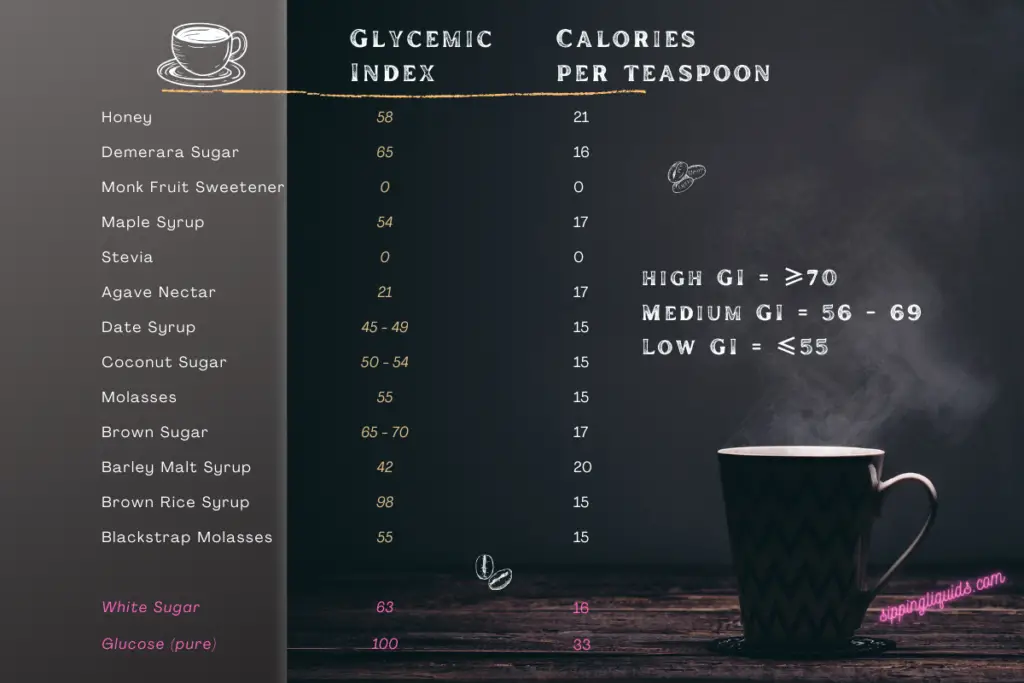
Here’s a summary of the glycemic index and calories for each natural sweetener. White sugar and pure glucose have been included for comparison:
1. Honey

Honey is a natural sweetener that’s been used for centuries. It’s rich in antioxidants, vitamins, and minerals, such as calcium, potassium, zinc, flavonoids, pheloic acids and vitamin C making it a healthier alternative to refined sugar. The taste of honey can vary depending on its floral source, offering a unique flavor profile to your coffee. Some find it mildly floral, while others appreciate its deep and earthy notes – Again it really depends where the bees are getting their nectar to make the honey.
Positive Health Effects: Honey has antimicrobial properties and may help soothe a sore throat or cough. It’s also packed with antioxidants that can support overall health. Honey has a slightly lower glycemic index (GI) than sugar so it won’t affect blood-sugar levels as much.
Negative Health Effects: Honey is calorie-dense, so moderation is key. Diabetics should be cautious due to its high sugar content.
Calories per Teaspoon: Approximately 21 calories
Glycemic Index (GI): The glycemic index of honey can vary depending on its floral source and processing, but it typically falls in the moderate range, around 58.
2. Demerara Sugar

Demerera Sugar is a type of raw sugar produced in various cane-growing countries, notably Mauritius, and is cherished for its subtle butterscotch aroma. It has become a popular tabletop sweetener in the United Kingdom, Australia, New Zealand, Canada, and increasingly, the United States.
Positive Health Effects: Demerara sugar, like other natural sugars, naturally contains some molasses which means it contains some minerals. While it’s not a significant source of nutrients, it can provide trace amounts of minerals like calcium, magnesium, iron as well as vitamins B3, B5 and B6.
Negative Health Effects: Demerara sugar, while less processed than white sugar, is still calorie-dense and can contribute to excess calorie intake if consumed in large quantities. It has a moderate to high glycemic index, which means it can lead to rapid spikes in blood sugar levels when consumed in excess.
Calories per Teaspoon: Approximately 16 calories (about the same as white sugar)
Glycemic Index (GI): Typically around 65
3. Monk Fruit Sweetener

Monk fruit sweetener is a calorie-free natural sweetener derived from the monk fruit (Siraitia grosvenorii), also known as Luo Han Guo. It has gained popularity as a sugar substitute due to its natural fruit origin and lack of calories and carbohydrates making it one of the healthiest coffee sweeteners on our list.
Monk fruit sweeteners contain monk fruit extract, which is approximately 150-200 times sweeter than sugar. This remarkable sweetness arises from natural compounds in monk fruit called mogrosides. However, to create a more familiar sugary taste, monk fruit sweeteners are often blended with other sweeteners. While erythritol is the most common addition to monk fruit sweeteners, manufacturers may also use allulose, stevia, or a combination of these.
Positive Health Effects:
Monk fruit sweetener is a low-calorie sweetener, and has a glycemic index of zero meaning it doesn’t impact blood sugar levels. Unlike sugar, monk fruit sweetener is less likely to promote tooth decay as cavity-causing bacteria in the mouth can’t metabolize or ferment erythritol, stevia or allulose.
Negative Health Effects:
Some people perceive a slight cooling sensation in their mouth when consuming sweeteners containing erythritol. This sensation can be off-putting for some. In large quantities, erythritol may cause digestive discomfort, including bloating, gas, and diarrhea. If this sounds like you, then try monk fruit sweetener with allulose which tastes more like regular sugar.
Calories per Teaspoon: Calorie-free
Glycemic Index (GI): Zero
4. Maple Syrup

Maple syrup is a delicious and natural sweetener derived from the sap of sugar maple trees. It adds a rich, caramel-like sweetness to your coffee. Pure maple syrup contains minerals like manganese, zinc, calcium, thiamine, potassium, and copper. One teaspoon of maple syrup contains about 11% of your daily value of manganese, which is used in the body for metabolizing carbohydrates, cholesterol, and glucose.
Positive Health Effects: Maple syrup provides up to 24 different antioxidants, which are more prevalent in darker colored (or grade) syrups. It also has a lower glycemic index compared to sugar, making it a better option for blood sugar control.
Negative Health Effects: Like honey, maple syrup is calorie-dense, so use it sparingly. Be sure to choose 100% pure maple syrup, as some commercial brands mix it with corn syrup. Basically the cheaper stuff usually contains corn syrup, but check the labels to be sure.
Calories per Teaspoon: Approximately 17 calories
Glycemic Index (GI): Pure maple syrup has a moderate glycemic index around 54, with variation based on grade and processing.
5. Stevia
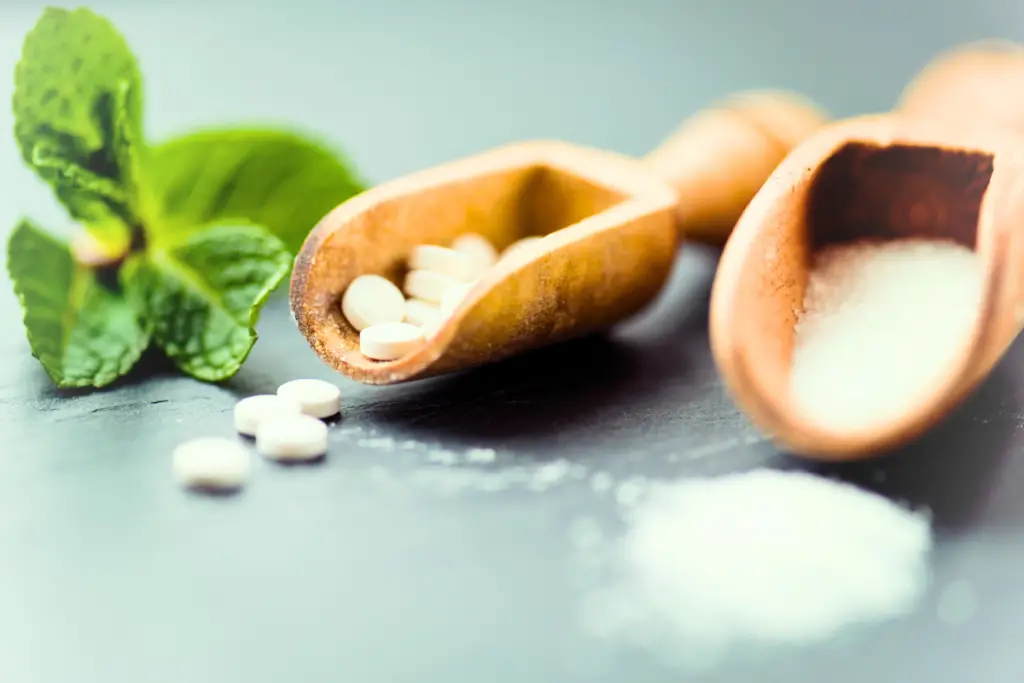
Stevia is a natural sweetener derived from the leaves of the stevia (rebaudiana Bertoni) plant. It’s known for being intensely sweet without calories. Stevia can add sweetness without altering the flavor of your coffee.
Positive Health Effects: Stevia has no calories and doesn’t impact blood sugar levels, making it an excellent choice for diabetics and those watching their calorie intake.
Negative Health Effects: Some people may detect a slight aftertaste with stevia. Additionally, the highly refined versions of stevia can contain additives, so opt for minimally processed options.
Calories per Teaspoon: Zero calories
Glycemic Index (GI): Stevia is considered to have a glycemic index of zero, making it a suitable choice for those concerned about blood sugar levels.
6. Date Syrup

Date syrup, made from dates, offers a unique, caramel-like sweetness to your coffee. It’s loaded with fiber and essential minerals, such as potassium and magnesium.
Positive Health Effects: The fiber content in date syrup can help support digestive health and reduce constipation. It’s also lower on the glycemic index.
Negative Health Effects: As with other natural sweeteners, it’s calorie-dense, so use it in moderation.
Calories per Teaspoon: Approximately 15 calories (which is equal to the calories in white sugar)
Glycemic Index (GI): Date syrup generally has a moderate to low glycemic index, typically falling in the range of 45-49, depending on processing and variety.
7. Agave Nectar

Agave nectar, also known as Maguey or Agave Syrup, is derived from the agave plant and has a taste similar to honey but with a milder flavor. It’s sweeter than sugar, so you’ll need less of it in your coffee.
Agave nectar has a very low glycemic index of 21 making it one of the healthiest coffee sweeteners on our list.
Although Agave nectar contains trace amounts of minerals like potassium, calcium, and selenium, as well as vitamins B and C, these quantities are too small to provide any significant nutritional benefits.
Positive Health Effects: Agave nectar has a much lower glycemic index than sugar, which can help stabilize blood sugar levels.
Negative Health Effects: It’s still relatively high in calories, so be mindful of portion sizes. Some commercially available agave syrups are heavily processed, so look for natural, organic options.
Calories per Teaspoon: Approximately 17 calories
Glycemic Index (GI): Agave nectar has a low glycemic index of 21, making it a good option for individuals looking to manage their blood sugar.
8. Coconut Sugar

Coconut sugar provides a subtly sweet flavor and can be a great alternative to refined sugar in coffee. However, coconut sugar is not made from coconuts! It comes from the sap of cut flower buds from the coconut palm tree. The process involves collecting the sap, heating it to evaporate the moisture, and then granulating the concentrated sap into sugar crystals. It is a relatively simple and traditional method that does not involve extensive processing, making coconut sugar a less refined alternative to white sugar.
Positive Health Effects: It has about the same number of calories as white sugar, but coconut sugar has a sightly lower glycemic index so its better for not spiking blood sugar levels. Coconut sugar also contains minerals such as potassium, magnesium, zinc and iron and some vitamins including B1, B2, B3 and B6 (these help release energy from carbohydrates, fats, and proteins).
Negative Health Effects: While it’s a better choice than table sugar, it’s still calorie-dense, so don’t overdo it.
Calories per Teaspoon: Approximately 15 calories
Glycemic Index (GI): Typically around 50 to 54.
9. Molasses

Molasses can add depth to the flavor of your coffee! It is often referred to as “regular” or “light” molasses and has a sweet and somewhat tangy flavor with a moderate level of bitterness. It retains a substantial portion of sugar from processing of the sugar cane juice and is a source of essential minerals like iron and calcium.
Positive Health Effects: Molasses contains a moderate amount of essential minerals like iron, calcium, magnesium, and potassium.
Negative Health Effects: There are no negatives, but it has a robust flavor that may not suit everyone’s palate, so use it sparingly at first.
Calories per Teaspoon: Approximately 15 calories
Glycemic Index (GI): Molasses has a low glycemic index, typically around 55, depending on the type and processing.
10. Brown Sugar

Brown sugar adds a warm sweetness to your coffee, and its molasses content gives it a unique flavor.
Positive Health Effects: Brown sugar has slightly higher amounts of calcium, iron, and potassium compared to white sugar, but are nutritionally insignificant.
Negative Health Effects: Brown sugar has roughly the same calories and glycemic index as white sugar. Even though it may look and taste a bit more natural, processed brown sugar is typically just white sugar with about 10% molasses added.
Calories per Teaspoon: Approximately 17 calories
Glycemic Index (GI): Brown sugar has a moderate glycemic index, similar to that of regular sugar, typically around 65 to 70.
11. Barley Malt Syrup

Barley malt syrup provides a malty sweetness that can be a delightful addition to coffee. It’s not as sweet as sugar, but it’s still calorie-dense. So, be mindful not to add too much barley malt syrup in an attempt to recreate the sweetness of sugar.
Positive Health Effects: Barley malt syrup offers a malty sweetness and can be a unique addition to coffee. It’s calorie-dense but contains some nutrients.
Negative Health Effects: Due to its calorie density, use it sparingly.
Calories per Teaspoon: Approximately 20 calories
Glycemic Index (GI): Barley malt syrup has a low to moderate glycemic index, typically around 42.
12. Brown Rice Syrup

Brown Rice syrup (also called rice malt syrup) offers a mild, neutral sweetness and is a common alternative to corn syrup. It’s suitable for those seeking gluten-free options.
To make brown rice syrup, the process begins by breaking down the starches in cooked brown rice into simpler sugars, primarily maltose. After that, they filter the resulting liquid to remove solid particles, leaving behind a starchy, sugary solution. Next, they heat the solution to evaporate excess water, concentrating the sugars, ultimately producing a syrup with a distinctive rice flavor.
Positive Health Effects: Rice syrup provides a mild, neutral sweetness and is gluten-free, making it suitable for those with dietary restrictions.
Negative Health Effects: It’s calorie-dense, so use it in moderation.
Calories per Teaspoon: Approximately 15 calories
Glycemic Index (GI): Brown rice syrup has a high glycemic index of 98.
13. Blackstrap Molasses
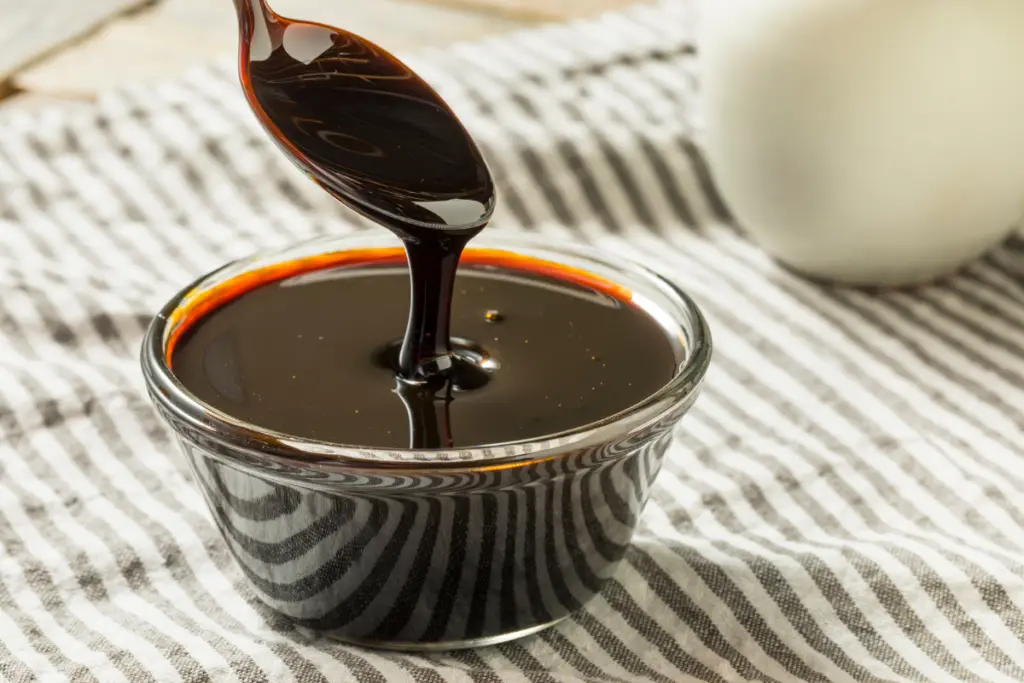
Blackstrap molasses is known for its stronger and somewhat bitter (some would say smoky) flavor, and is prized for its higher mineral content and lower sugar content compared to regular molasses. It’s often chosen for its potential health benefits due to its rich nutrient profile.
During the sugar refining process, much of the sugar is removed in the earlier stages, leaving blackstrap molasses with a much lower sugar content than regular molasses.
Positive Health Effects: Blackstrap molasses is nutritionally dense. It contains significantly higher levels of essential minerals than regular molasses. It’s an excellent source of iron, calcium, magnesium, and potassium. It can be considered a healthier choice among molasses varieties.
Negative Health Effects: Its robust and somewhat bitter flavor may not be to everyone’s liking. Use it sparingly.
Calories per Teaspoon: Approximately 15 calories
Glycemic Index (GI): Blackstrap molasses has a low glycemic index, typically around 55, similar to regular molasses and even many fruits and vegetables. However this will depend on the type of blackstrap molasses and processing.
Alternative Sweeteners
1. Milk and Milk Alternatives
Milk, whether dairy or plant-based, can be a natural way to add sweetness to your coffee. Lactose in dairy milk and naturally occurring sugars in some plant-based options like almond milk can sweeten your brew without the need for additional sweeteners.
Positive Health Effects: Milk provides essential nutrients like calcium and protein. Plant-based options like almond and oat milk can be suitable choices for those with lactose intolerance or dietary restrictions.
Negative Health Effects: Be cautious with flavored milk, as it may contain added sugars. Unsweetened versions are the healthiest choice.
2. Spices
Spices like cinnamon, nutmeg, and cardamom can add a delightful natural sweetness to your coffee. They also bring a depth of flavor without the need for extra sugar.
Positive Health Effects: Spices are rich in antioxidants and can have various health benefits, including potential anti-inflammatory properties.
Negative Health Effects: There are generally no adverse health effects associated with using spices in moderation.
3. Vanilla Extract
A few drops of pure vanilla extract can infuse your coffee with a mild, sweet aroma and flavor. It’s a low-calorie option that enhances your coffee without overpowering it.
Positive Health Effects: Pure vanilla extract contains no added sugars or calories.
Negative Health Effects: There are no significant negative health effects associated with using pure vanilla extract.
Artificial Sweeteners
1. Stevia (Again)
While stevia was mentioned as a natural sweetener, some versions of it are highly processed.
Here are some ways in which stevia can be highly processed:
- Refining: Isolating the sweet compounds from the stevia leaf typically involves water extraction and purification to remove impurities and the sweet glycosides, called steviol glycosides, are obtained.
- Purification: The steviol glycosides extracted from the leaves are often subjected to purification processes to remove any remaining non-sweet compounds and achieve a cleaner taste.
- Blending: Some stevia products blend the refined extract with other ingredients like erythritol, maltodextrin, or dextrose to improve the texture and sweetness profile, making it more similar to sugar. These additional ingredients can be highly processed and are used to dilute the intense sweetness of steviol glycosides.
- Tabletop Sweeteners: Stevia-based tabletop sweeteners, like the ones you might find in packets or bottles, often include additional ingredients for bulk and texture, which can be highly processed. These additives are used to mimic the volume and texture of sugar.
It’s important to note that not all stevia products are highly processed. Some are minimally processed and closer to the natural form of the leaf, preserving more of its natural compounds. When choosing a stevia product, it’s advisable to read the ingredient list and opt for those with fewer additives if you prefer a less processed option.
Positive Health Effects: The calorie-free nature of these artificial stevia sweeteners makes them suitable for diabetics and calorie-conscious individuals.
Negative Health Effects: Some people may still detect a mild aftertaste with certain artificial stevia products.
2. Aspartame, Saccharin, and Sucralose
Aspartame, Saccharin, and Sucralose are among the most common artificial sweeteners. They are calorie-free, intensely sweet, and created through distinct chemical processes:
- Aspartame: It’s synthesized by combining two amino acids, aspartic acid and phenylalanine, through a controlled fermentation process.
- Saccharin: Saccharin is derived from the chemical benzoic sulfimide. It’s produced through chemical reactions, involving toluene, chlorosulfonic acid, and ammonia. Saccharin was one of the first artificial sweeteners and is often used in sugar substitutes.
- Sucralose: Sucralose is made from sugar through a multi-step process that involves selectively chlorinating the sugar molecule. This modification renders it calorie-free and much sweeter than regular sugar.
Positive Health Effects: These artificial sweeteners do not affect blood sugar levels and are generally safe when consumed within established acceptable daily intake levels.
Negative Health Effects: Controversy exists regarding their long-term health effects. In particular, the safety of Aspartame is still debated.
3. Monk fruit sweetener (Again)
We listed monk fruit sweetener as a natural sweetener, but can also be considered artificial due to the added sweeteners including erythritol, stevia or allulose.
We have already discussed how Stevia might be considered artificial here.
Erythritol and allulose can also be found naturally in some fruits; however, they are rare and usually only in small amounts. In commercial products such as monk fruit sweeteners, it’s more common for the artificial versions of erythritol and allulose to be used as they are easy and cheap to manufacture. Therefore, while monk fruit sweeteners can be considered natural, they can also be artificial – depending on how you want to look at it.
Positive Health Effects: The added sweeteners in monk fruit sweeteners are are zero-calorie and do not affect blood sugar levels.
Negative Health Effects: Most monk fruit sweeteners include erythritol, which may cause digestive issues if consumed in large quantities. Allulose appears to have no adverse health effects when consumed in small quantities.
Conclusion
The healthiest sweetener for your coffee depends on your dietary preferences and goals. Stevia and monk fruit sweeteners are great options if you don’t want any added calories or to spike your blood sugar levels. Natural sweeteners like honey and maple syrup offer a rich flavor and some nutrients but should be used in moderation as they are calorie rich compared to some other options. Milk, spices, and vanilla extract provide natural sweetness without added sugars. Artificial sweeteners can be calorie-free, but their long-term effects are debated.
Ultimately, the healthiest choice is one that aligns with your taste preferences and dietary goals. Experiment with different sweeteners and methods to find the perfect balance for your morning cup of coffee. Remember, moderation is key, and a little sweetness can go a long way in enhancing your coffee-drinking experience.

The Best Water Filter Bottle We’ve Ever Used

Clearly Filtered | Stainless Steel Filter Bottles
We really love these filter bottles for keeping your drinks cool and contaminant free! They remove 99.9% of over 220 contaminants and use BPA-free plastics and double-walled stainless steel to produce some awesome looking designs with numerous bottle sizes for every situation. You can find them at Clearlyfiltered.com